Foundations of Anatomy of the Eye
Category: Category 1
Summary:
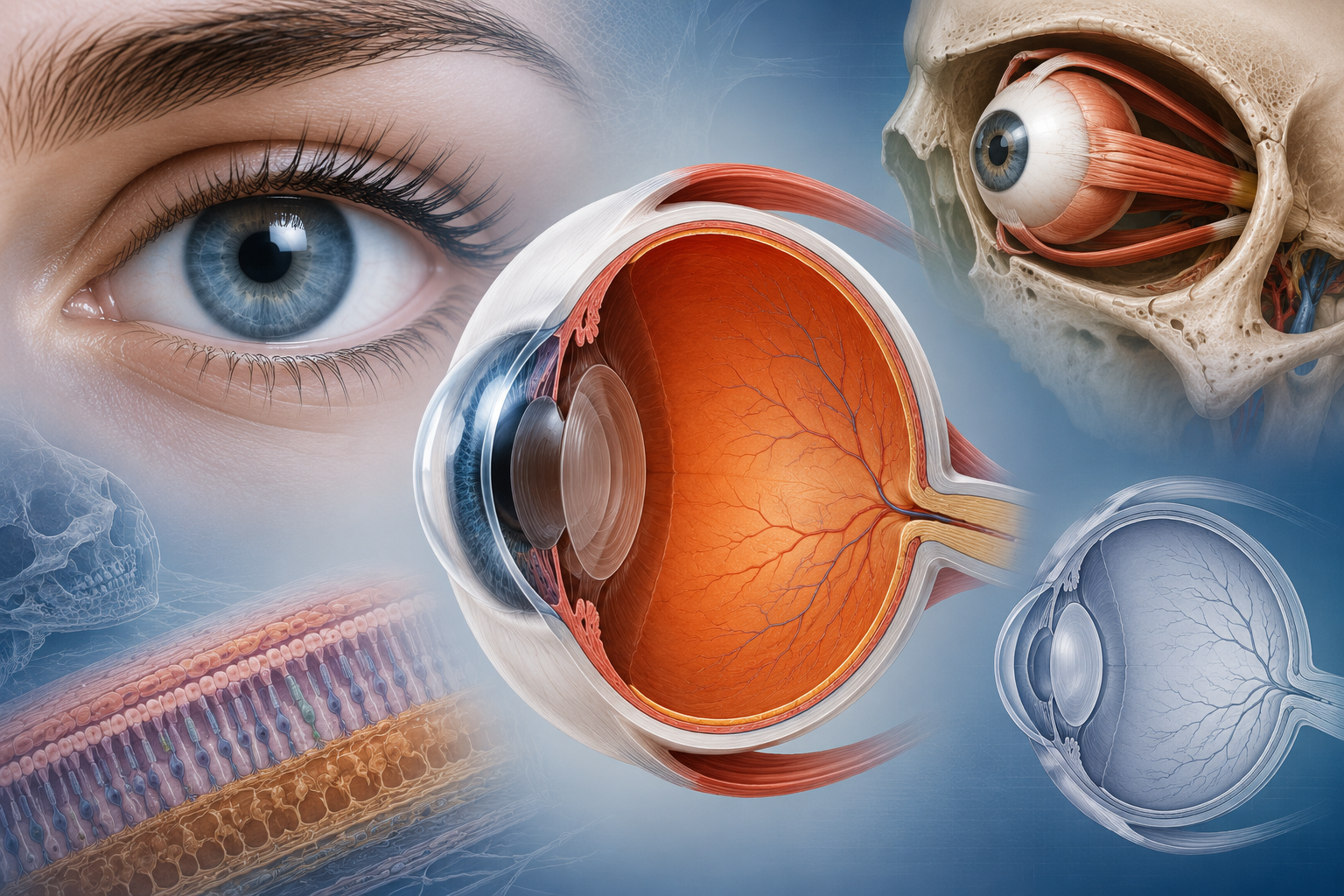
Audience: Ophthalmic clinical staff with little or no previous anatomy knowledge
Estimated completion time: 20–30 minutes
Level: Introductory
Scope: This course introduces the basic anatomy of the eye. It does not cover ophthalmic imaging, imaging interpretation or imaging equipment.
Course overview
The eye can seem complex at first, but its anatomy becomes much easier to understand when it is broken down into clear sections.
This short course introduces the main structures of the eye, where they are located, and what they broadly do. It is designed for ophthalmic clinical staff who are new to eye anatomy or would benefit from a structured refresher.
You will look at:
- The eye as a specialised sensory organ
- Basic anatomical direction terms
- External structures and supporting tissues
- The front of the eye
- The back of the eye
- The journey of light through the eye
- How accurate anatomical language supports safe ophthalmic practice
Learning outcomes
By the end of this course, learners should be able to:
- Identify the main external and internal structures of the eye.
- Describe the broad role of the cornea, lens, iris, retina, optic nerve and supporting tissues.
- Understand basic directional terminology such as anterior, posterior, nasal, temporal, superior and inferior.
- Explain the eye as a light-focusing and signal-transmitting organ.
- Recognise why accurate anatomical language matters in ophthalmic practice.
Start Date:
Thursday, 30 April 2026
Topics: 9